Johnson Tractor's Role in Utah's Sustainable Agriculture Landscape
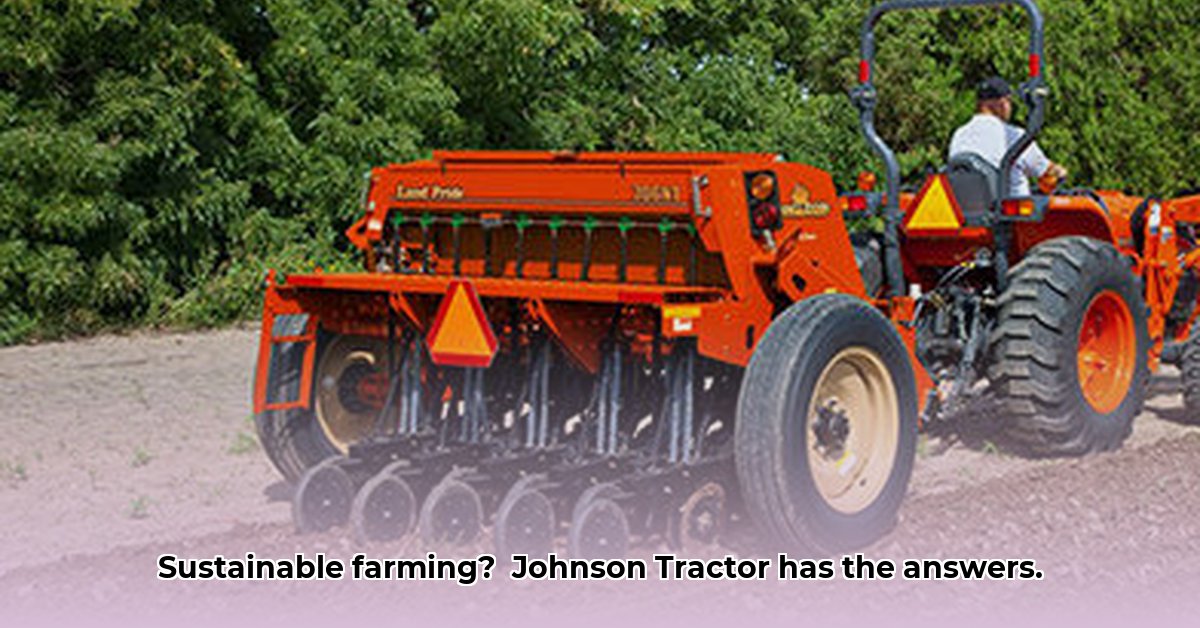
Johnson Tractor in Spanish Fork (JTI) occupies a pivotal position within Utah's agricultural ecosystem. As a primary distributor and service provider for Kubota farm equipment, JTI directly influences the sustainability practices of numerous farms across the region. This case study examines JTI's contributions to sustainable agriculture, exploring both its successes and areas requiring further development. The analysis is based primarily on publicly available information from JTI's website 1, acknowledging inherent limitations in data availability. For improved efficiency, consider exploring advanced technology like seed drills.
Methodology and Data Limitations
This analysis primarily relies on publicly available information from JTI's website, focusing on the equipment offered and the services provided. Direct data on JTI's internal sustainability initiatives (e.g., carbon footprint, waste management) was not readily accessible. Therefore, inferences are drawn based on JTI's partnership with Kubota, a company known for producing relatively fuel-efficient equipment, and the general impact of efficient farm equipment on sustainability. The interpretation is further informed by common sustainable farming practices and the challenges faced by Utah farmers.
Findings: JTI's Contribution to Sustainable Agriculture
JTI's contribution to sustainable agriculture is primarily indirect, stemming from its provision of Kubota equipment known for its relatively high fuel efficiency compared to some competitors. This efficiency translates directly to reduced fuel consumption, thus lowering greenhouse gas emissions and operating costs for farmers. However, the analysis is limited by a lack of quantitative data on the specific fuel efficiency of the Kubota models prevalent among JTI's client base. Furthermore, the assessment currently lacks direct insights into JTI's own environmental practices, such as waste management and energy sourcing. This absence of granular data represents a significant gap in the comprehensive evaluation of JTI's overall sustainability footprint.
JTI's customer service and readily available parts and repair services contribute positively to sustainable agriculture. Well-maintained equipment reduces downtime, maximizing operational efficiency and minimizing resource waste, a crucial element of sustainable farming. However, the extent of this contribution requires further quantification, ideally through farmer surveys and direct feedback.
Discussion: Opportunities and Challenges
The potential for JTI to become a leader in promoting sustainable agriculture in Utah is undeniable. Their established presence in the community and their partnership with Kubota offer a strong foundation upon which to build more impactful sustainability initiatives. However, several areas need improvement:
Data Transparency: Publicly disseminating data on the specific fuel efficiency of the Kubota models sold, alongside clear commitments on JTI's own environmental footprint, would greatly enhance their credibility and engagement with sustainability-conscious farmers. How can JTI demonstrate a quantifiable positive impact on the environment?
Farmer Collaboration: Directly engaging with farmers to understand their most pressing sustainability challenges is crucial for effectively tailoring solutions. Conducting targeted surveys to understand farmer needs regarding sustainable technology and practices could inform product offerings and service improvements.
Supply Chain Sustainability: Investigating the environmental impact of JTI’s supply chain – from manufacturing to transportation – and identifying opportunities for improvement, would further strengthen their commitment to sustainability. What steps can they take to improve the sustainable nature of their supply chain?
Recommendations
For Johnson Tractor Spanish Fork:
- Conduct a comprehensive farmer survey to assess sustainability priorities and identify key challenges.
- Publish a detailed sustainability report that includes specific, measurable, achievable, relevant, and time-bound (SMART) goals.
- Collaborate with Kubota to provide detailed fuel efficiency data for each model sold.
- Assess and report on the environmental impact of JTI’s own business operations and supply chains.
For Kubota:
- Publicly share comprehensive environmental impact data for all models, including lifecycle assessments.
- Invest in research and development of even more fuel-efficient and sustainable agricultural technologies.
For Utah Farmers:
- Utilize JTI's expertise to assess their farm’s sustainability needs and select appropriate equipment.
- Adopt sustainable farming practices, such as no-till farming and precision irrigation.
For Utah Local Government:
- Offer financial incentives and training programs to support farmers adopting sustainable technologies.
- Partner with JTI and Kubota to promote sustainable agricultural practices throughout the region.
Conclusion
JTI's role in supporting sustainable agriculture in Utah is promising but requires further development. Transparently documenting its own sustainability initiatives and actively collaborating with farmers and Kubota to address the challenges of sustainable agriculture is crucial to achieving broader environmental improvements. Further research, especially focusing on quantifying the environmental impact of JTI's operations and the impact of its equipment on its customers' environmental footprint, is essential for fully realizing the potential of this partnership.